
For years, digital assets were treated like a side story in finance. Not anymore. As tokenization grows and on-chain activity expands, digital assets are becoming harder to separate from the broader conversation around payments, investing, and market infrastructure.
As markets evolve, it is of growing importance that market participants understand what digital assets are exactly, and how value is transferred, owned, and managed through them.
What is a digital asset?
A digital asset in financial terms refers to a blockchain-based asset or tokenized claim that can be owned, transferred, and sometimes programmed to do more than traditional assets can.
Source: Toobit
In simple terms, a digital asset is something recorded in digital form that carries value, ownership, or rights.
In finance, that usually means assets that can be held, transferred, traded, or programmed through digital infrastructure, especially blockchain-based systems.
The U.S. Internal Revenue Service (IRS) defines digital assets broadly as digital representations of value recorded on a cryptographically secured distributed ledger or similar technology, and its examples include cryptocurrencies, stablecoins, and non-fungible tokens (NFTs).
That includes blockchain-native assets like Bitcoin and Ethereum, as well as digital representations of other assets like tokenized bonds, or on-chain claims tied to real-world value.
What makes digital assets important is not just that they are digital. It is that they can function inside financial markets. They can be traded, used for payments, posted as collateral, or programmed to move when certain conditions are met.
That last part is doing a lot of work. Traditional financial (TradFi) assets are digital already in many ways, but they still rely on fragmented ledgers, batch processing, and a fair amount of reconciliation. Digital assets aim to reduce that friction by putting the asset record and transfer logic closer together.
The core types of digital assets in finance
Digital assets are not one thing wearing different hats. They serve different roles.
-
Cryptocurrencies
These are blockchain-native assets such as Bitcoin, Ethereum and meme coins like Dogecoin. They are often used as speculative assets, settlement assets, or collateral, depending on the platform and the use case.
-
Stablecoins
Stablecoins are designed to track a reference asset, usually a fiat currency such as the U.S. dollar. Their aim is to keep the speed and portability of blockchain rails without the same level of price volatility.
-
Central Bank Digital Currencies (CBDCs)
CBDCs are digital forms of sovereign currency issued by a central bank. They are designed to combine the convenience of digital payments with the backing and legal status of state-issued money.
-
Tokenized assets
This category includes digital representations of traditional financial products or real-world assets (RWAs) such as bonds, private credit, and real estate. Same basic idea, new rails.
-
Utility and governance tokens
These assets can grant access to a service, reduce fees, or allow holders to vote on protocol decisions, often through a decentralized autonomous organization (DAO) or similar governance structure. They may have economic value, but the rights attached to them depend heavily on the structure behind them.
Why digital assets matter and how they show up in the real world
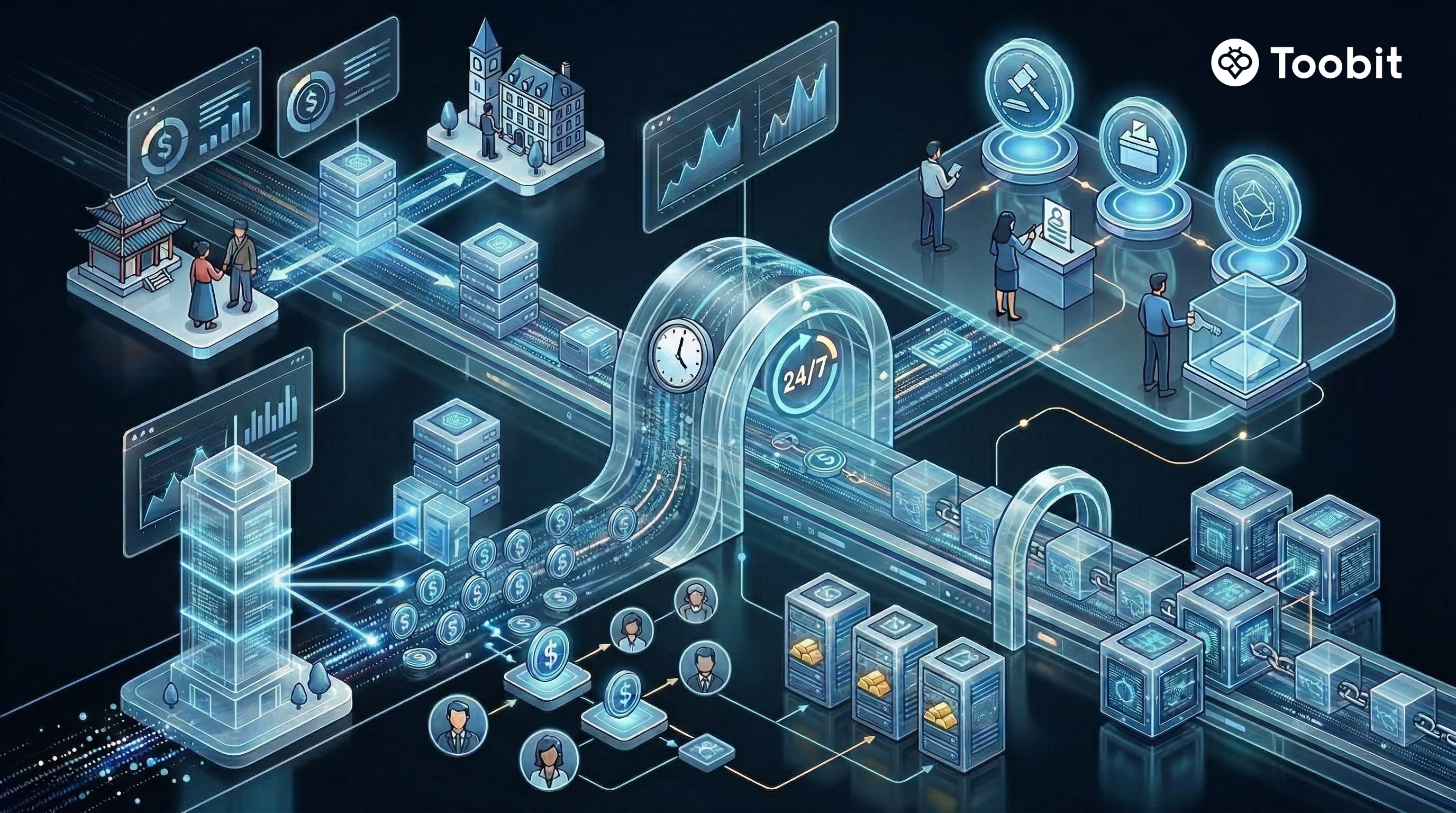
Digital assets matter because they can make finance faster, more flexible, and easier to access.
Source: Toobit
-
They can make cross-border payments more practical.
Digital assets can reduce the number of intermediaries, cut down reconciliation steps, and support faster settlement. The Bank for International Settlements (BIS) has argued that tokenized platforms could help shape the next generation of the monetary and financial system, especially in areas like payments and securities infrastructure.
For example, a freelancer in one country can receive payment in a dollar-pegged stablecoin from a client abroad without waiting several business days for funds to clear.
-
They can streamline settlement and recordkeeping.
Digital assets can be linked to rules and conditions, reducing the need for separate systems to update ownership records after a transaction takes place.
Payments can be triggered automatically. Coupon distributions can be embedded into workflows. Transfers can happen only when specific requirements are met. A tokenized bond, for example, can be issued, transferred, and recorded on digital infrastructure, which may simplify parts of the post-trade process.
This does not remove risk. It just means execution can become more automated and less dependent on manual coordination.
-
They can lower the barrier to accessing certain assets.
Tokenization allows high-value assets to be divided into smaller units. In practice, that means anyone may be able to gain exposure to a real estate project, private credit product, or fund through fractional ownership rather than needing enough capital to buy in at a traditional minimum.
-
They can keep markets moving beyond traditional hours.
Many traditional financial systems still depend on business-day schedules and market hours. Digital assets operate on infrastructure that runs continuously, which is one reason they are increasingly used for round-the-clock trading, treasury transfers, and collateral movement.
-
They can support new forms of digital ownership.
Some digital assets do more than represent money. They can also represent access, rights, or participation inside a digital ecosystem. For example, a governance token may allow holders to vote on protocol proposals, while a utility token may be required to use a specific blockchain-based service.
That is why digital assets matter. They are not just digital versions of existing assets. They open up new ways to move value, access markets, and structure ownership.
New rails, same legal questions
Digital assets get a lot more real once the rulebook starts catching up.
In the European Union (EU), Markets in Crypto-Assets Regulation (MiCA) has created a region-wide framework for crypto-assets and service providers, with the regime entering into force from December 30, 2024. It is not the final word, but it is a major step toward a more structured operating environment, and a sign that digital assets are increasingly valued in finance.
That matters because regulation follows function, not branding. If an asset behaves like a security, a payment tool, or another regulated product, calling it a token does not magically place it outside the system. The packaging may be new, the obligations are not.
Risks when using digital assets
Digital assets may improve speed and flexibility, but they do not cancel out risk.
-
Custody risk is a big one. If access depends on private keys, losing them can mean losing the asset permanently.
-
Legal rights also matter. Holding a token does not always mean holding the underlying asset in the way you assume. The specific claim depends on the structure, issuer, jurisdiction, and documentation.
-
Liquidity risk matters too. An asset can be tokenized and still trade like a very empty room.
-
Regulatory risk is still a concern. Rules are becoming clearer, but they are still evolving across jurisdictions. Anyone dealing with digital assets seriously needs to understand not just the asset, but the rulebook around it.
The bottom line
Digital assets are important because they allow for faster payment rails, more flexible ownership models and new forms of market access. They are not a replacement for the whole financial industry, but gradually are becoming part of how finance is built, upgraded, and connected.
That shift is still unfolding. But it is already big enough that ignoring it would be the more outdated move.
This article is for informational purposes only and does not constitute financial advice. Always do your own research (DYOR) before making any decisions.
How to buy crypto on Toobit
To buy crypto on Toobit, create an account, complete verification, and go to Buy Crypto. Choose a token, select a payment method, and confirm the purchase. Your assets will appear in Spot Account once the transaction settles.
Congratulations, you now know how to purchase crypto on Toobit!


