
The digital asset market has always swung between confidence and panic, and as 2025 winds down, it’s firmly in the latter camp.
After months of talk about six-figure prices and nonstop gains, the mood shifted fast with a single-day net outflow of about $358 million from U.S. spot Bitcoin exchange-traded funds (ETFs). That number alone was enough to rattle a market already on edge.
On paper, $358 million may look small in a market measured in trillions. In practice, it matters because crypto trades on narratives as much as numbers. This wasn’t just money leaving; it was sentiment moving.
Is this the start of abandonment, or simply capital rotating while the market catches its breath?
So…panic or profit-taking?
A single-day withdrawal of this size can feel alarming, but it doesn’t automatically mean broad abandonment. Often, the simplest explanation is rotation and rebalancing: funds and large accounts take profits after rallies, rebalance exposure across assets, or shift into other products that now offer clearer regulatory footing.
Reporting around the outflow suggests the move tempered near-term upside expectations without signaling a wholesale exit from the asset class.
What likely caused the $358M move?
Several forces likely combined. First, profit-taking after a strong run will prompt large holders to trim positions.
Second, macro headlines and liquidity flows, like central bank moves and fiscal shifts, change where big pools of capital sit (equity and bond flows have been active around recent Fed actions).
Third, tactical selling by funds or counterparty liquidations can amplify outflows in a single day. In some cases, reports show large sales of spot holdings by entities rebalancing institutional exposures.
To grasp the weight of the roughly $358 million outflow seen around mid-December 2025, context matters. Instead of the usual year-end rally, the market got hit with a margin call.
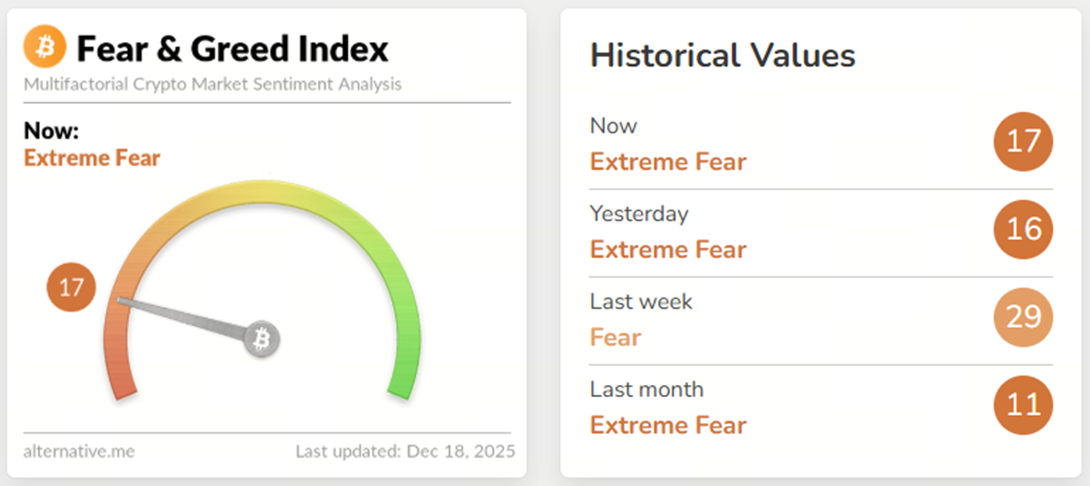
The Crypto Fear & Greed Index dropped to 17, firmly in “Extreme Fear” territory. That mood reflects a mix of pressures: a more hawkish Federal Reserve tone, worries about a yen carry trade unwind, and key technical levels giving way.
Did Bitcoin price react like it was being abandoned?
Price did feel the impact: markets pulled back and volatility ticked up as the outflow hit the tape. But price moves that coincide with ETF outflows are often short-term: the same venues that facilitated big inflows can absorb outflows over time, and flows have often reversed after initial withdrawals.
Historical episodes (large outflows from major ETFs) have not always predicted a sustained bear market; they can simply mark a rotation day.
A quieter subplot to the Bitcoin outflows is that capital is not leaving the market so much as changing seats. The narrative has shifted.
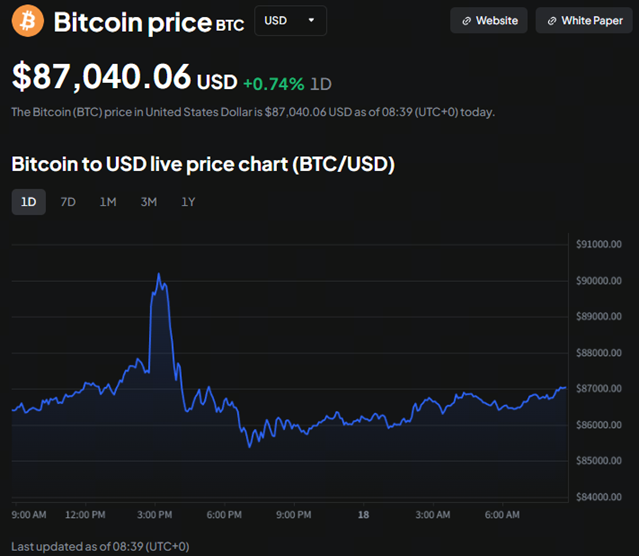
Bitcoin, trading in the mid-$80,000s after peaking near $126,000 in October, now looks “expensive” to some traders when compared with tokens priced under $2. At the time of writing, the price of BTC is trading around $87,000, a 0.74% increase in the last day but a 3.58% decrease in the last 7 days.
Unit bias is doing its usual work, favoring large token counts over fractional ownership. Rotating out of Bitcoin into names like Solana or XRP signals a move toward higher risk, not an exit from the space. The money is still in play; it has just found a louder table.
Is this the start of a flight from the asset?
Not necessarily. A single-day outflow, even a notable one, doesn’t prove structural abandonment. In prior cycles, ETFs experienced large redemptions followed by renewed inflows once macro noise subsided.
The bigger story is the cumulative picture over weeks and months: sustained net outflows would be more concerning. Right now, the data reads like a pause or rotation rather than a definitive exit.
So, is the market actually panicking, or does it just look that way? To a casual observer, selling is selling. In reality, a large share of the outflow likely came from unwinding the basis trade.
This strategy involves buying a spot ETF while shorting Bitcoin futures to capture a spread. When prices fall and that spread narrows, the trade stops working. Closing it requires selling the ETF, which shows up as an outflow.
Seen this way, part of the $358 million move looks less like lost confidence and more like automated funds shutting down an arbitrage trade. The flows reflect math, not emotion.
Why the media focuses on ETFs (and rightly so)
ETFs are a high-velocity window into large-balance activity. They let large pools move exposure on and off quickly and in regulated shells, making their flows an attractive real-time proxy for big-pocket behavior.
But remember: ETFs are not the whole market. Spot books, OTC desks, derivatives venues, and miners still move and hold the underlying asset, sometimes in ways that offset ETF flow headlines.
What to watch next: Three practical signals
-
Net flow trend over 7–30 days. One day of outflows is noise; a streak is a pattern.
-
Exchange net balances. Are wallets and custodians adding or trimming? A steady flight from custodial holdings would be a stronger signal.
-
Macro liquidity cues. Rate decisions and fiscal developments move large pools of capital; watch central bank signals and money-market shifts.
Is BTC being abandoned or is it simply resetting?
A $358 million outflow grabs attention, but it’s not the end. It’s a reminder that capital rotates, rebalances, and sometimes steps aside. If you’re relying on price swings or headlines to judge long-term relevance, you’re looking in the wrong place.
The clearer signals sit in multi-week flows, custodial balances, and broader liquidity trends. Those will show whether this was a brief pause or the start of something more serious.
So, is Bitcoin being abandoned? The data points elsewhere. The outflow looks more like repositioning than retreat. Leverage is being cleared, trades are resetting, and short-term fear is being flushed out.
At the same time, on-chain data shows large holders adding to positions during the same period while short-term players rotate out, liquidity changes hands, and the system keeps running.


