
If there is one macroeconomic event that can shake the digital asset market awake, it is a Federal Reserve rate cut. The Fed may not care about Bitcoin’s next move, but Bitcoin certainly cares about the Fed.
In fact, for assets like Bitcoin (BTC) and Ethereum (ETH), monetary policy often behaves like an invisible hand guiding prices…, or occasionally slapping the market across the face.
Every update to the Fed’s dot plot was treated as a signal, with many hoping that a shift toward lower interest rates would push digital assets higher.
The idea behind this expectation is straightforward. Even though markets can sometimes react negatively to a “hawkish cut,” the broader structural effects of lower rates are still significant.
More liquidity, more courage: The risk appetite switch
When the Fed cuts rates, borrowing becomes cheaper. Money becomes easier to access, banks lend more freely, and there is simply more U.S. dollar liquidity moving through the financial system.
This matters because behavior shifts depending on how much reward comes from “safe” assets. When Treasury yields fall, the appeal of holding a low-yield bond drops quickly, and capital starts moving elsewhere in search of better returns.
Crypto, especially Bitcoin, sits in the “higher return, higher risk” category. When liquidity rises, these assets become more attractive, and the market often shows stronger buying interest.
Historically, this kind of environment has supported bullish trends as capital rotates out of low-yield positions and into assets with more upside.
A softer dollar, a stronger Bitcoin
A common side effect of a rate cut is a weaker U.S. dollar. Lower interest rates make holding dollars less appealing, so capital starts looking for assets that can hold value better if the dollar loses purchasing power.
This is when Bitcoin’s “digital gold” label returns to the spotlight. As the dollar softens, the case for holding alternative stores of value grows stronger. Bitcoin benefits the most, and Ethereum and other large-cap assets often follow as the market shifts.
If the Fed signals a longer easing cycle, the hedge trade becomes even more convincing. Some capital moves to avoid dollar risk, and some moves simply because others are expected to do the same. In both cases, BTC and ETH tend to react first.
Cheap money fuels bigger bets
Lower borrowing costs do more than increase liquidity; they literally make it cheaper to take risks.
Institutional players, hedge funds, and venture firms can borrow capital at lower rates and deploy it into higher-growth sectors. That includes digital assets, blockchain startups, and decentralized finance (DeFi) protocols.
The effect shows up in two ways:
Institutional investment rises
Cheaper capital unlocks more aggressive allocations into digital assets. For Venture Capitalists (VCs), it becomes easier to justify big bets in early-stage blockchain projects. For funds, it opens the door to accumulating BTC, ETH, or even structured products tied to them.
Trading leverage increases
Retail and professional traders alike find leverage cheaper. This boosts trading volume, amplifies speculative activity, and often supports price momentum, at least while markets remain orderly.
It’s not always healthy, but the link between rate cuts and higher leverage is one of the most consistent patterns in digital asset markets.
The spillover: ETH, DeFi, and altcoins get their turn
Loose monetary policy in the U.S. tends to push capital into global markets, where it looks for better returns. In the digital asset space, this usually means more flow into higher-risk sectors, including altcoins.
Ethereum benefits early, especially sectors that depend on liquidity, like DeFi lending, staking markets, and non-fungible tokens (NFTs). When capital is cheap, activity across these ecosystems picks up. That usually supports the ETH price, and sometimes creates outsized moves in the broader Ethereum ecosystem.
Then comes the altcoin rotation.
As Bitcoin strengthens, market confidence grows. Historically, this is the point where traders start expanding into smaller-cap tokens. With more liquidity in the system, altcoins often rally after BTC establishes momentum, sometimes leading to the infamous “Altcoin Season,” when almost everything seems to pump at once.
Crypto market’s lacklustre reaction to the December 2025 Fed rate cut
When the Fed cut rates by 25 basis points in December 2025, lowering the target to 3.50–3.75%, markets across the board anticipated a boost in liquidity and risk appetite. That’s usually good news for risk assets like Bitcoin and Ethereum.
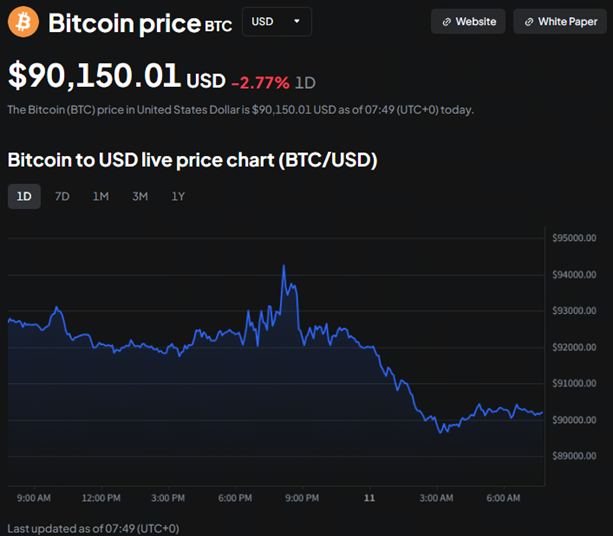
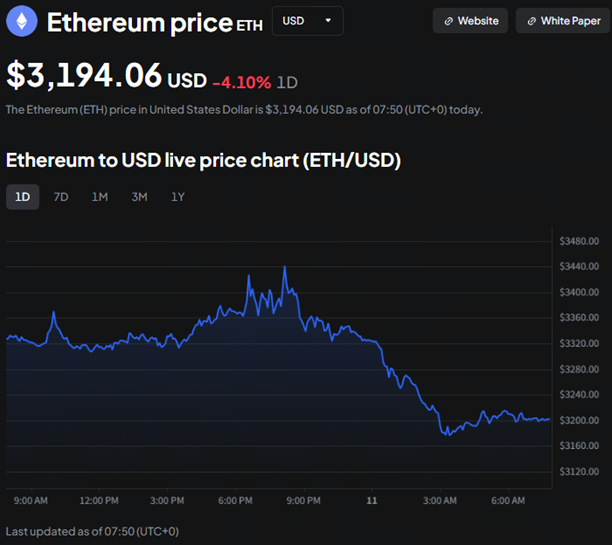
But the immediate reaction in crypto was weak. Instead of rallying, both BTC and ETH slipped: Bitcoin fell around 2.8%, Ethereum dropped nearly 3.6%.
That slump followed a short-lived bounce up to roughly $94,000 for Bitcoin before prices retraced.
At the time of writing, BTC price is trading around $90,000 and ETH price is trading just below $3,200.
Why the cut didn’t spark a crypto fireworks show
-
It was already priced in: The rate cut had been widely expected; markets may have already baked it into prices.
-
Cautious Fed tone: The Fed’s remarks were cautious about further cuts and signaled economic risks, tempering enthusiasm.
-
Macro and market headwinds: Broader economic uncertainty, global recession fears, and volatility in equities seem to have weighed more heavily on sentiment than the rate move itself.
-
Risk-off mood dominates: Despite looser money, traders appear reluctant to jump back in without clearer upside signals, especially after recent sharp losses.
Is there any positive reaction at all?
Yes, but it’s subtle and uneven. Some analysts argue the rate cut may still act as a “soft underpinning,” making crypto a more attractive place to store value if the dollar weakens and real yields remain low.
Others think institutional and retail money may flow back gradually, but only under stable macro conditions, not during weeks of headline-driven panic.
In short, the cut alone wasn’t enough. It could provide conditions for a rebound, but it didn’t launch one by itself.
The recent rate cut was supposed to boost risk assets, but crypto largely resisted. As of now, there’s no clear rally, just muted optimism and many crosscurrents.
A Fed rate cut isn’t a guaranteed launchpad for higher prices, and this one wasn’t strong enough to break through the current uncertainty. Still, it’s worth watching how the market adjusts because when liquidity shifts, crypto often moves fast.


