
Since March 30, 2026, markets have looked restless but not directionless.
Prices have bounced on hopes of de-escalation in the Middle East, then stalled again as oil, inflation fears, and policy uncertainty pushed risk appetite back into check. Bitcoin (BTC) has reacted fastest to those mood swings, but the bigger story is broader than one token:
Markets are being pulled between short-term relief and longer-term caution, which is why every breakout attempt has felt like hard work.
This is not a clean bullish trend, and it is not a full breakdown either. It is a high-friction environment where macro headlines, sovereign-linked selling, institutional positioning, and regulatory developments are all shaping price action at the same time.
That mix has left markets stuck in a tense holding pattern rather than a decisive move higher.
Why markets are struggling to pick a direction
When markets lose momentum, it is usually because buyers and sellers are working from different playbooks. Right now, one side is trading optimism around de-escalation and renewed demand. The other side is looking at oil, inflation pressure, uneven exchange-traded fund (ETF) flows, and supply that keeps appearing whenever prices start to look strong.
There is enough good news to prevent a clean collapse, but not enough conviction to unlock a sustained breakout.
For example, U.S. spot Bitcoin ETFs saw net inflows of around $190 million on March 30 and March 31 before flipping back to outflows of $173.7 million on April 1. That is not the kind of steady demand profile that usually powers a clean rally. It is a reminder that participation is still reactive rather than committed.
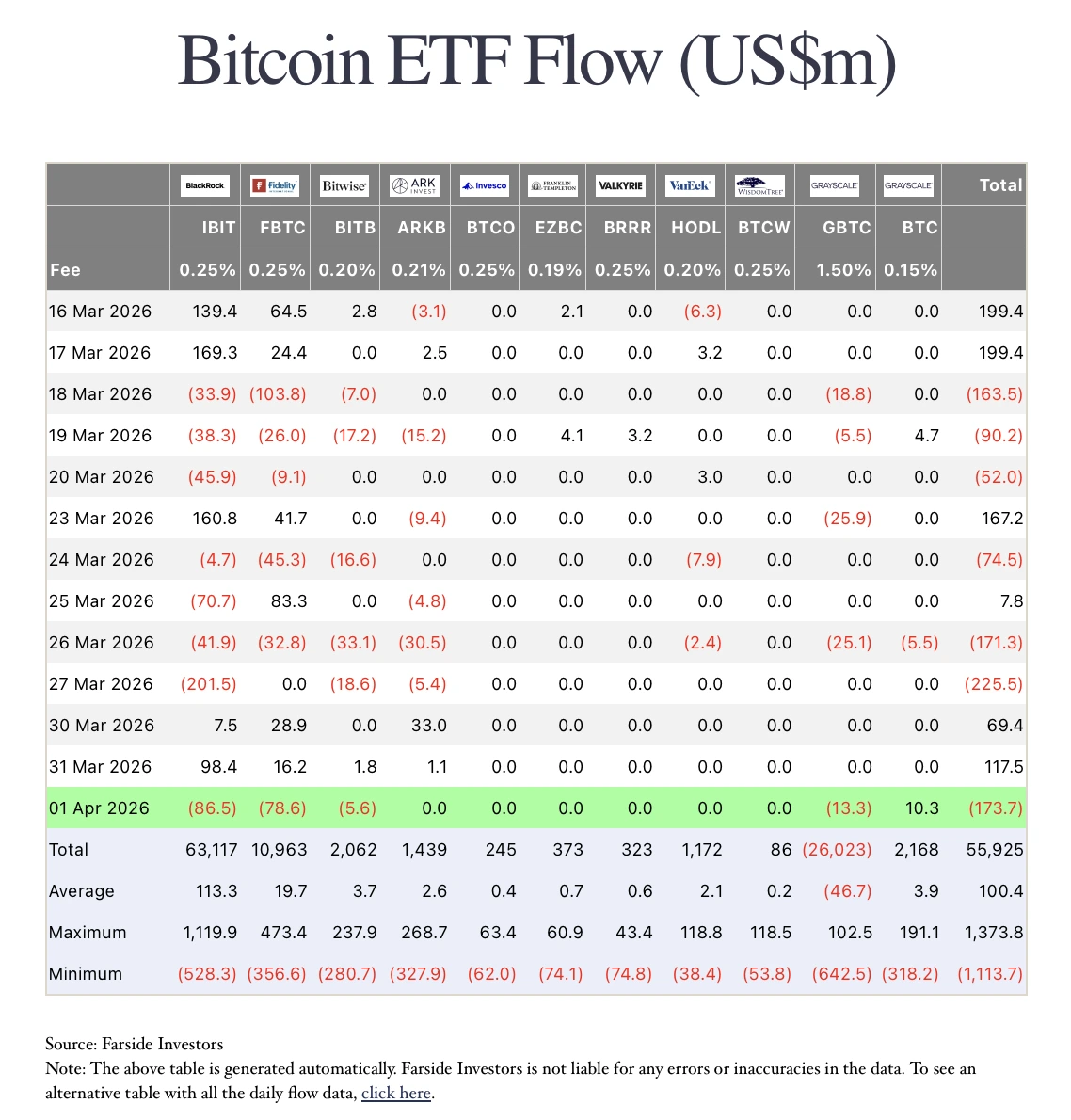
Screenshot of Bitcoin ETF flows. Source: Farside Investors
Geopolitics is still the fastest market mover
The clearest short-term catalyst has been the Middle East.
Markets briefly leaned into de-escalation hopes after earlier comments from President Donald Trump were interpreted as a sign that tensions with Iran could ease within weeks. However, just hours ago, Reuters reported that Trump simply said military action would continue for the next 2 to 3 weeks, with no firm ceasefire path or policy change attached.
That was enough to cool optimism and push markets back into a more defensive stance.
Why does that matter so much for markets?
Because war risk tends to push oil higher, and higher oil feeds inflation concerns, making it harder for central banks to ease policy. Reuters reported Brent crude above $106 on April 2 as those concerns returned, helping explain why the recent relief rally ran out of steam.
Supply is still showing up on strength
Another reason markets keep losing momentum is that rallies are running into real supply.
One of the clearest examples has been Bhutan-linked Bitcoin transfers. Blockchain analytics platform Arkham tracked fresh wallet outflows tied to Bhutan on April 1, reinforcing the view that sovereign-linked holdings have continued moving out this year.
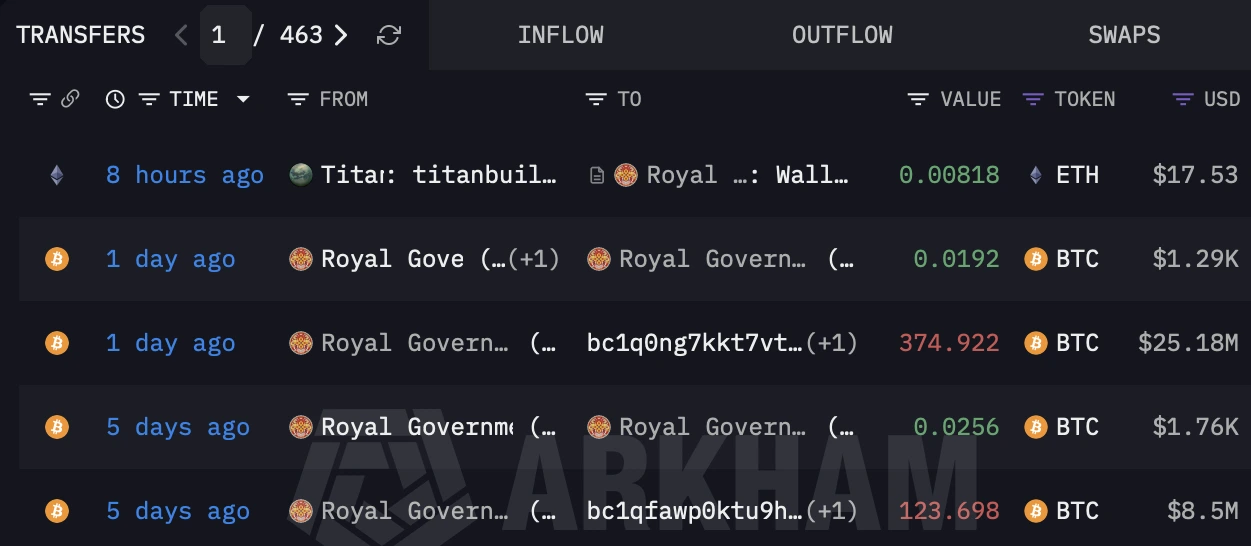
Screenshot of recent on-chain flows for Royal Government of Bhutan (Druk Holdings) account. Source: Arkham
That does not prove every transferred token was dumped immediately, but it does support the view that sovereign-linked holdings are part of the overhead pressure whenever BTC starts pushing higher.
Similarly, ETF behavior adds to that ceiling effect. Fresh inflows have appeared, but they have not been consistent enough to overpower supply and macro hesitation at the same time.
Regulation is becoming more targeted, which matters more than it sounds
This week also brought legal developments that may not excite short-term speculators, but still matter for market structure.
Reuters reported that Justin Sun agreed to a proposed $10 million settlement, after which the Securities and Exchange Commission (SEC) moved to dismiss its civil fraud claims, subject to court approval. That is not the same as saying the case simply vanished, but it does add to the sense that U.S. crypto enforcement is becoming more negotiated and case-specific.
At the same time, the Department of Justice charged Jonathan Spalletta over the 2021 Uranium Finance exploit, alleging wire fraud, money laundering, and additional offenses tied to losses of more than $50 million.
That sends a different but equally important message: Regulation is not disappearing; it is becoming more selective, with greater focus on fraud, theft, and identifiable misconduct.
For larger pools of capital, that kind of cleanup can make markets look more investable over time.
Ethereum is showing a different kind of strength
Last but not least, Ethereum (ETH) is carving out its own narrative while Bitcoin continues to lead the broader market conversation.
Bitmine Immersion Technologies said this week that its ETH holdings had reached about 4.732 million ETH, with roughly 3.143 million of that already staked through its MAVAN validator network. That matters because staked ETH is still part of supply, but it is not as liquid as coins sitting ready to be sold on the open market.
This does not mean ETH is immune to macro shocks. It does mean some large players are still building long-term infrastructure positions even while short-term sentiment stays fragile. That kind of behavior can help create a stronger floor underneath Ethereum than the mood-driven headlines alone might suggest.
In a market that still feels nervous, reduced liquid supply is not a trivial detail.
What all this means for markets now
Put together, the current setup is easier to understand than it first looks.
-
Geopolitical headlines are driving rapid mood swings.
-
Oil and inflation fears are limiting how much risk buyers want to take.
-
Supply is showing up on rallies.
-
At the same time, institutional ETH positioning and selective regulatory progress are helping keep the broader market from fully unraveling.
That is why markets feel stuck. It is not because nothing is happening. It is because too many important things are happening at once, and they are pointing in different directions.
The result is a market that still has support underneath it, but keeps running into resistance when it tries to move with confidence.
Why this matters
This kind of environment usually rewards patience more than impulse. When markets are being pushed around by macro headlines, not every bounce is the start of a trend, and not every drop is the start of a collapse.
More often, price is reacting to temporary pressure while participants wait for a cleaner signal. Since March 30, markets have stayed supported, but macro pressure has kept upside on a short leash.
The next cleaner move likely depends on one of two things:
-
Geopolitical risk easing enough for oil and inflation pressure to cool, or
-
Demand strengthening enough to absorb supply without fading.
Until then, markets may stay jumpy, reactive, and frustratingly undecided. All you need to do is stay calm, and wait it out.
This article is for informational purposes only and does not constitute financial advice. Always do your own research (DYOR) before making any decisions.
How to buy crypto on Toobit
To buy crypto on Toobit, create an account, complete verification, and go to Buy crypto. Choose a token, select a payment method, and confirm the purchase. Your assets will appear in Spot Account once the transaction settles.
Congratulations, you now know how to purchase crypto on Toobit!


