
The first week of November 2025 won’t be remembered for new highs but for when crypto’s confidence cracked. After months of treating $100,000 as untouchable, Bitcoin (BTC) broke below it, fast. What started as a normal market correction turned into a wave of massive liquidations.
Bitcoin’s drop was steep. The price of Bitcoin briefly fell under $100,000, its lowest since June and a 20% plunge from its $126,000 peak a month earlier. Ethereum (ETH), XRP, and Solana (SOL) also dropped over 20%, marking one of the harshest trading days of the year.
Within 24 hours, over 470,000 traders were liquidated, wiping out nearly $1.8 billion in mostly long positions. The crash didn’t just hit prices; it broke sentiment, reminding traders that in crypto, no floor holds forever.
Can this damage be undone?
Bitcoin breached a key level
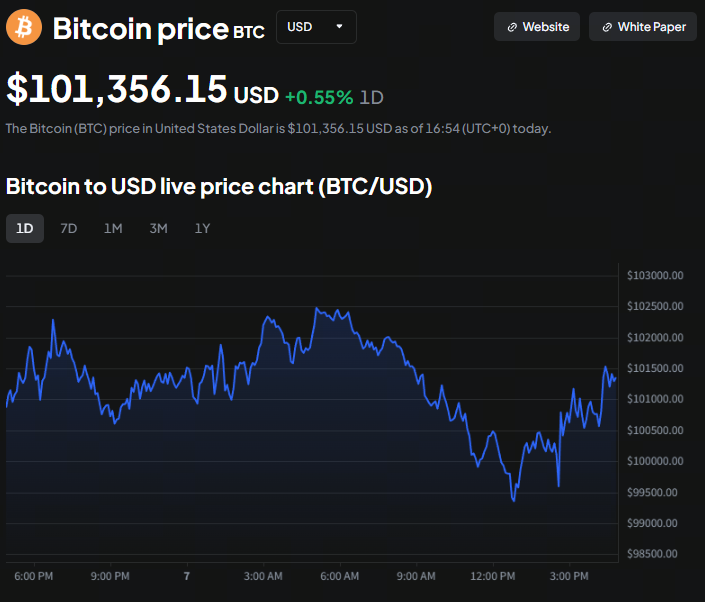
Bitcoin has long been a benchmark for the crypto market. Recently, it briefly dipped below $100,000 for the first time since June, reaching around $99,000.
According to BTC price charts, that level had held firm until now, meaning the break was a big deal. The BTC price movement from near-peak into this dip served as a reminder that even flagship assets aren’t immune.
Most analyst commentary pushes a cautious BTC price prediction: either consolidation around $100,000 or perhaps a deeper drop if support fails.
Bitcoin price has since recovered slightly, trading a little over $101,000 at the time of writing.
Major altcoin sell-off
It wasn’t just Bitcoin. Big names like Ethereum, XRP and Solana took heavy hits. Losses in this correction exceeded 20% in many cases. For example, reports show Ethereum dropped roughly 11% amid the initial shock.
XRP, despite recent regulatory progress, got caught in the broader sell-off, with its price sliding amid uncertainty around its long-awaited exchanged traded fund (ETF).
The major altcoin sell-off highlighted one thing: when the tide goes out, even the big ships feel it.
Massive liquidations rock the markets
For those using high leverage, Bitcoin’s drop below $100,000 was a harsh wake-up call. The sudden decline triggered a wave of forced liquidation. In just 24 hours, over 470,000 positions were liquidated, with total losses approaching $1.8 billion.
The blow hit mostly long positions, catching traders who had bet on a quick return to six figures. Analysts described the event as a market reset, noting that most of the liquidations were on the buying side.
These forced exits aren’t just bad for the individuals; they become macro events in crypto. When key support levels break, automatic stops and leveraged liquidations can turn small corrections into bigger drops.
Was this sharp decline the bottom, or just the beginning of the real pain?
This is what many traders are feeling. The market has taken several big hits in a row:
-
First, the “Trump tariff shock” in October, which led to $19 billion in liquidations.
-
Then, the Fed’s 25-basis-point rate cut and Jerome Powell’s hawkish comments triggered nearly $600 million in leveraged liquidations.
-
Now, the early November flash crash added another $1.8 billion in losses.
The optimistic view is that these liquidations cleaned up the market. High-leverage positions were removed, leaving more stable capital. Bitcoin’s price has dropped but is now in a more sustainable range.
The pessimistic view is that macro pressures, like the Fed’s stance and geopolitical risks, remain strong. Until a clear positive trigger appears, such as an XRP ETF approval or signs of global rate cuts, another sharp decline is possible.
So… can the market rebound?
Yes, but it won’t be an elevator ride back up. Recovery now depends on a few moving parts:
-
Bitcoin’s blueprint matters: If Bitcoin price stabilises above $100,000 and interest from institutions resurfaces, it could pull the market back into risk-on mode.
-
Altcoins need follow-through: For assets like Cardano and XRP, it’s not enough to just hold, they need new adoption or news to drive ADA or XRP prices higher.
-
Macro clarity: If the Fed signals easing and global risks ease, momentum could return. But if policy stays tight, expect risk assets to remain under pressure.
-
Forced-liquidation exhaustion: The big blow may have already occurred. If so, the path to recovery could be smoother, but if more support breaks, the pain could deepen.
Final thoughts
This wasn’t just a pullback; it was a liquidity purge caused by macro shocks and leveraged positions. The market cleared out excess, and now it’s recovering. Historically, big liquidation events are often followed by a rebound, but this one could take time.
If you’re following BTC, SOL, or XRP closely, remember: this is a test of patience, not just timing. Keep your risk under control and your expectations realistic; recovery may be slow rather than fast.


