
How geopolitics is moving Bitcoin in 2026
Bitcoin (BTC) likes to market itself as an outsider asset. In 2026, that story is getting harder to sell.
As of April 10, BTC is trading around $72,071, after reclaiming the low $70,000s this week as markets reacted to a temporary U.S.–Iran ceasefire and a broader rebound in risk appetite.
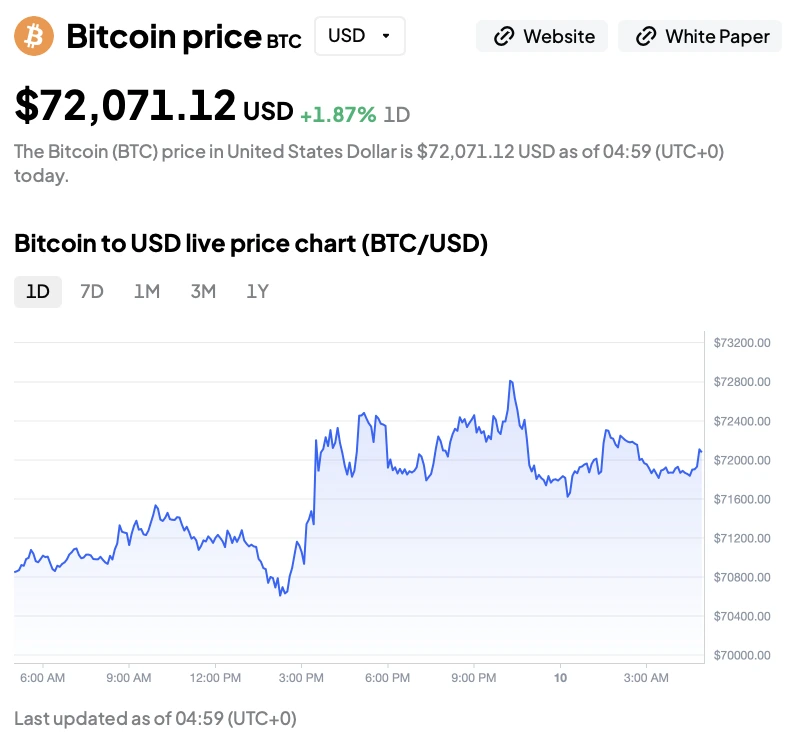
BTC-USDT trading pair as of April 10, 2026, 04:59 UTC. Source: Toobit
At the same time, the total market cap across digital assets is sitting near $2.52 trillion.
On paper, that looks like a clean relief rally. In reality, it is a reminder that Bitcoin now trades inside the same macro machine as everything else: war risk, tariff shocks, oil prices, the dollar, and Washington policy.
That matters because markets are now treating BTC less like a disconnected rebel asset and more like a high-volatility expression of global risk, liquidity, and policy expectations.
A market snapshot that says a lot
The setup is already telling.
Bitcoin is hovering at the low $72,000s today, while Ethereum is trading around $2,196.
Spot U.S. Bitcoin exchange-traded funds (ETFs) posted a strong $471.4 million net inflow on April 6, flipped to a $159.1 million net outflow on April 7, and then bounced back with $358.1 million in net inflows on April 9. The swinghighlights how quickly macro sentiment can reshape institutional positioning.
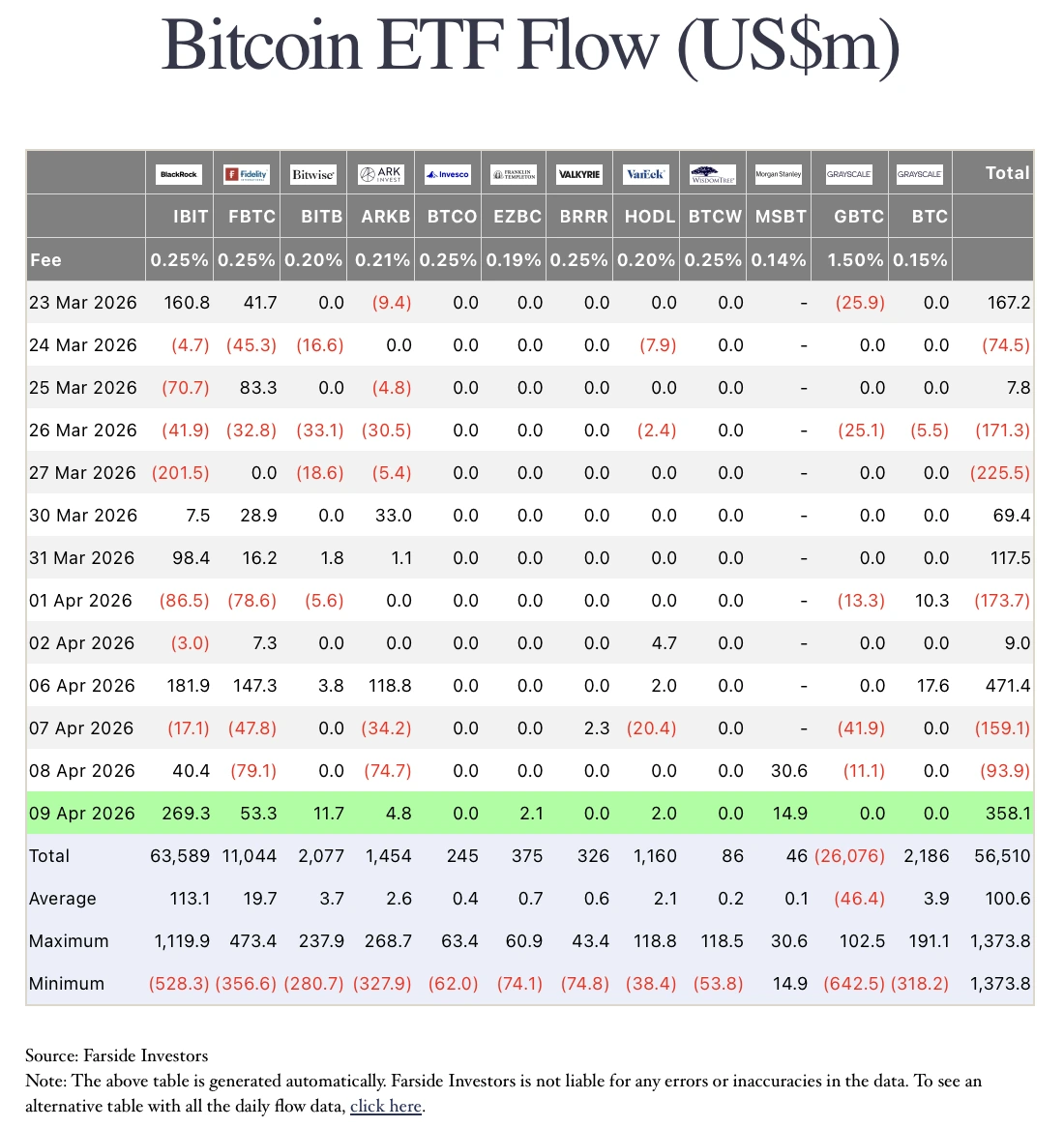
BTC ETF flows as of April 10, 2026, 04:59 UTC. Source: Farside Investors
However, sentiment is still cautious. Alternative.me's Fear and Greed Index is sitting at 16, which is still in "Extreme Fear."
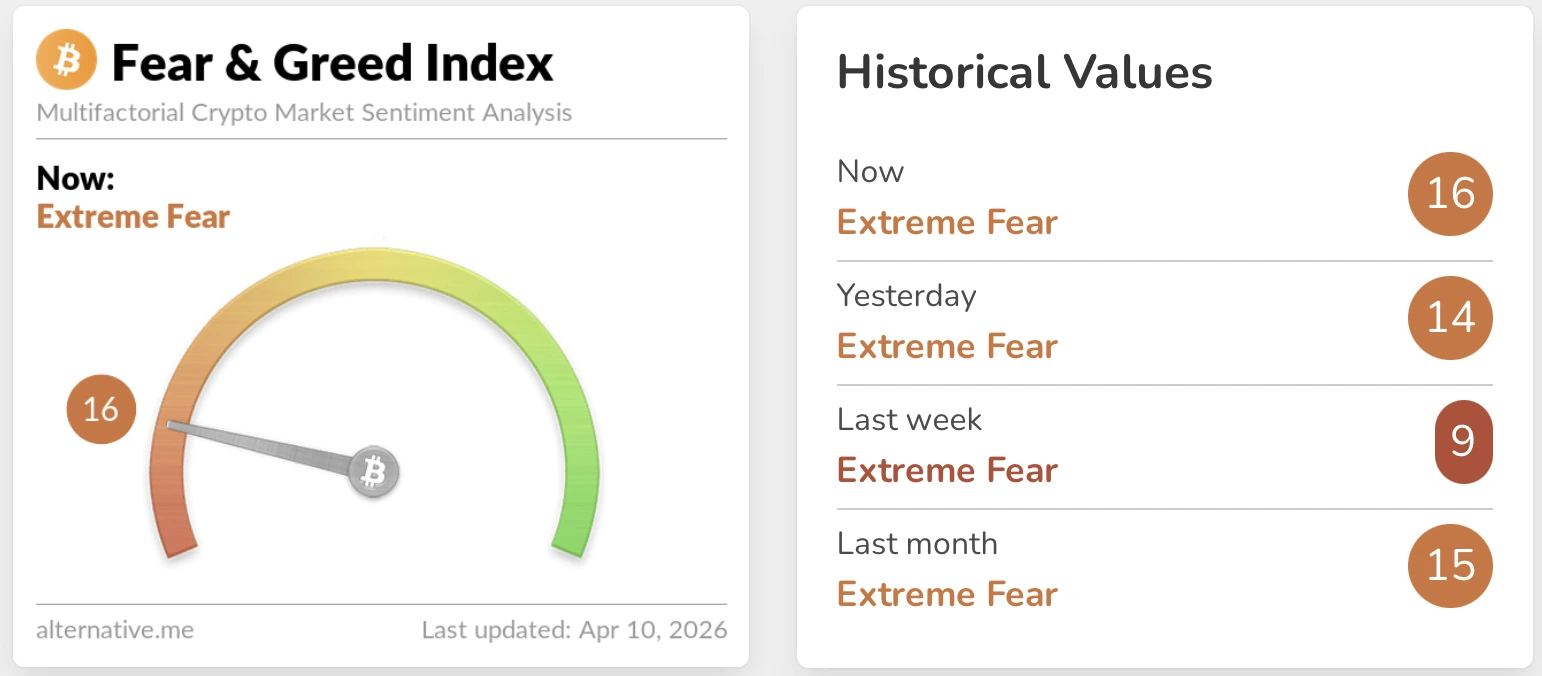
Sentiment is still extremely fearful at 16. Source: Alternative.me
That mismatch is important. Prices have bounced, but confidence has not fully healed. In other words, the market is tradable, not yet comfortable.
The U.S.–Iran ceasefire gave Bitcoin a relief bid, but the story is bigger than one headline
But the move was never just about diplomatic relief.
The ceasefire remains fragile, and the Strait of Hormuz continues to be the market's pressure point. Reuters reported on April 9 that shipping traffic through the strait had dropped to less than 10% of normal levels, with only 7 ships transiting in 24 hours versus a typical daily level of around 140. Additionally, under the ceasefire arrangement, Iran would allow no more than 15 vessels a day through.
That matters because if shipping stays restricted, oil prices can remain elevated, inflation risks can linger, and markets can quickly turn cautious again. Barclays announced that delays in restoring Hormuz flows pose upside risks to its Brent forecast, underscoring how fragile the post-ceasefire rebound still is.
In short, BTC benefited from the initial exhale, but whether that move holds depends on whether geopolitical stress actually fades, not just whether a ceasefire is announced.
Trump's broader policy backdrop still matters
Beyond the ceasefire itself, Trump's tariff threats and unpredictable policy signals are still shaping macro sentiment. That matters for Bitcoin because BTC is reacting not just to geopolitics directly, but to what those headlines do to oil prices, the dollar, and risk appetite.
Oil, the dollar, and rates are the real transmission channels
Geopolitics rarely stops at headlines. For Bitcoin, the impact usually travels through 3 main channels.
-
Oil
When conflict threatens energy supply, oil tends to react first.
Supply risks around the Strait of Hormuz have kept the wider energy markets on edge even after the ceasefire. If oil prices remain high, it can feed into inflation and complicate the Federal Reserve's effort to bring price pressures lower before cutting rates. That can cap upside for risk assets, including Bitcoin.
-
The dollar
As ceasefire hopes improved sentiment, the dollar fell to a 1-month low while Bitcoin moved higher. A softer dollar can support BTC at the margin because it tends to ease financial conditions and improve appetite for globally priced risk assets.
Bitcoin is not a pure dollar inverse, but in 2026 the relationship is hard to ignore.
-
Rates and liquidity
This is where the bigger picture comes in. Oil, inflation, and dollar moves all feed into rate expectations, which can reshape liquidity and speculative positioning very quickly.
That is the real mechanism. Bitcoin is not just reacting to geopolitics. It is reacting to what geopolitics does to macro conditions.
Regulation has also become a geopolitical story
Crypto regulation is no longer just a domestic legal debate; it is now wrapped into competition between jurisdictions.
Reuters reported on April 9 that Treasury Secretary Scott Bessent urged Congress to pass the CLARITY Act, arguing that regulatory uncertainty has pushed digital asset development overseas to places with clearer rules.
That is not just a policy headline. It is a geopolitical signal that the U.S. increasingly sees digital asset infrastructure as something tied to competitiveness, capital formation, and strategic influence.
For Bitcoin, that matters because geopolitics in 2026 is not only about conflict zones and ceasefires. It is also about where capital feels safe building.
What this means for Bitcoin now
-
Bitcoin is trading less like an isolated niche asset and more like a macro-sensitive one. That means major geopolitical events can spark sharper and faster reactions than they did a few cycles ago.
-
The market is still headline-driven. The rally off the ceasefire news is real, but so is the fragility behind it.
-
Watch oil, the dollar, ETF flows, and the policy tone coming out of Washington. Those are the channels that turn geopolitics into price action.
How to start trading Bitcoin (BTC)
Bitcoin's the OG—still king of the hill, still moving markets. Whether you're stacking sats or going full degen with leverage, Toobit gives you everything you need. Spot, Futures, and all the bells and whistles.
The bottom line
Bitcoin in 2026 is not insulated from geopolitics. It reacts to it through every major macro channel that matters: risk sentiment, oil, the dollar, ETF flows, and regulation.
The latest move above $71,000 is not just a crypto rally. It is a reminder that BTC now trades in direct conversation with the wider world.
From Trump's tariff agenda to the U.S.–Iran ceasefire, geopolitics is no longer background noise. It is part of the price action.
How to buy crypto on Toobit
To buy crypto on Toobit, create an account, complete verification, and go to Buy crypto. Choose a token, select a payment method, and confirm the purchase. Your assets will appear in Spot Account once the transaction settles.
Congratulations, you now know how to purchase crypto on Toobit!


