
With the U.S. government reopening after a prolonged shutdown, the financial markets have fresh fuel and the question now is whether this renewed liquidity will light a fire under Bitcoin (BTC) and broader crypto assets.
The mechanics are simple: when government operations resume, data flows, paychecks hit bank accounts, contracts restart, and risk markets tend to perk up. The big issue for Bitcoin is whether this wave of liquidity can translate into sustained upside rather than just a short‑term rally.
The market impact of this reopening is already visible in equities, and crypto could follow the same path.
Why does this matter to crypto
During the government shutdown, key releases like inflation data and employment reports were delayed, creating uncertainty in the markets. That gap dampened risk appetite and made it harder to gauge where capital would go.
With agencies back in action, markets now have clarity again; and for cryptocurrency, that means one thing: liquidity could start moving.
In past shutdowns, once the gates reopened, BTC surged. After the 2019 shutdown ended, Bitcoin soared from roughly $3,500 to near $14,000 in five months; about a 300 % move. This surge was fueled by renewed liquidity, investor confidence, and easing macro tension as risk assets sentiment flipped positive.
The market impact of renewed confidence and available liquidity can be significant if history repeats.
More than just fresh cash
Liquidity here isn’t just “money” in a vague sense; it’s about the conditions that allow capital to move into risk assets. If the Treasury General Account (TGA) starts drawing down, bank reserves loosen, fixed‑income markets ease, and the dollar weakens, all of these can reroute capital into crypto.
Meanwhile, inflows into spot Bitcoin exchange-traded funds (ETFs) and improved exchange order‑book depth are telling signs that liquidity is flowing into crypto rather than just staying in traditional markets.
Why risk appetite drives crypto
Risk appetite matters. When stocks rally and bonds ease, assets like BTC and Ethereum (ETH) tend to follow. Recent data show crypto moving in tandem with equities as the shutdown ends.
On the flip side, if inflation rises or yields increase, money may move out of risky assets and into safer ones.
Market sentiment remains fragile after the October "Black Friday" event that erased billions. The U.S. government reopening provides a psychological anchor, shifting the focus from crisis management to growth opportunities.
Short‑term rally or something bigger?
Is this a short-term bounce or a bigger move? History and rising liquidity suggest some near-term upside. If inflation eases and Treasury issuance stays steady, BTC could rise above previous highs.
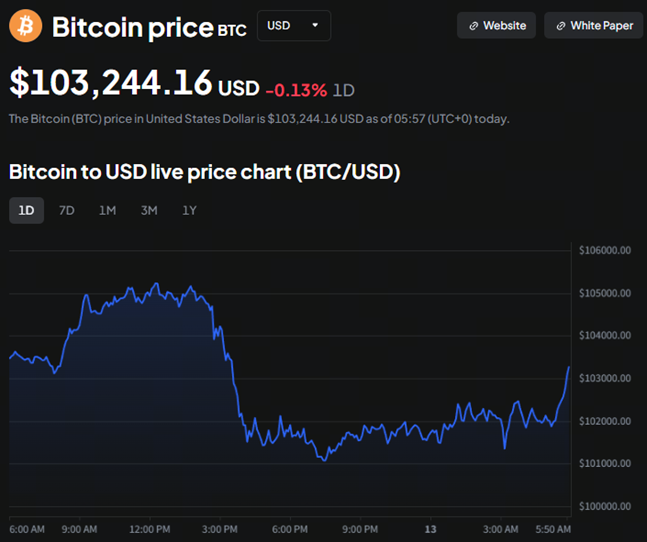
However, the market is larger and more mature now. A 300 % surge like in 2019 would take Bitcoin past $400,000; possible, but unlikely without very aggressive liquidity or a major catalyst. BTC price is trading a little above $103,000 at the time of writing.
Watch the risk assets, watch the risks
Still, it wouldn’t be crypto without the risks. If yields rise again, or if the reopening disappoints (for instance fiscal stimulus gets watered down), liquidity could reverse course.
Other risks: regulatory developments, ETF outflows, macro shocks. A surge in real interest rates or a stronger dollar can quickly pull liquidity back out of BTC.
Does the market have the conviction?
The key question is whether the crypto market has the conviction to follow the money. The massive $19 billion crash before the reopening shook the confidence of many leveraged traders.
A short-term rally is likely, but sustaining it depends on whether large, non-leveraged institutional players (the so-called “smart money”) see the renewed liquidity as a stable foundation or just another chance for volatility.
The final outcome comes down to human behavior. History suggests a short-term rally is plausible, driven by liquidity. But until Bitcoin decisively breaks resistance, the shadow of the recent crash and lingering doubts about market conviction will continue to influence sentiment.


